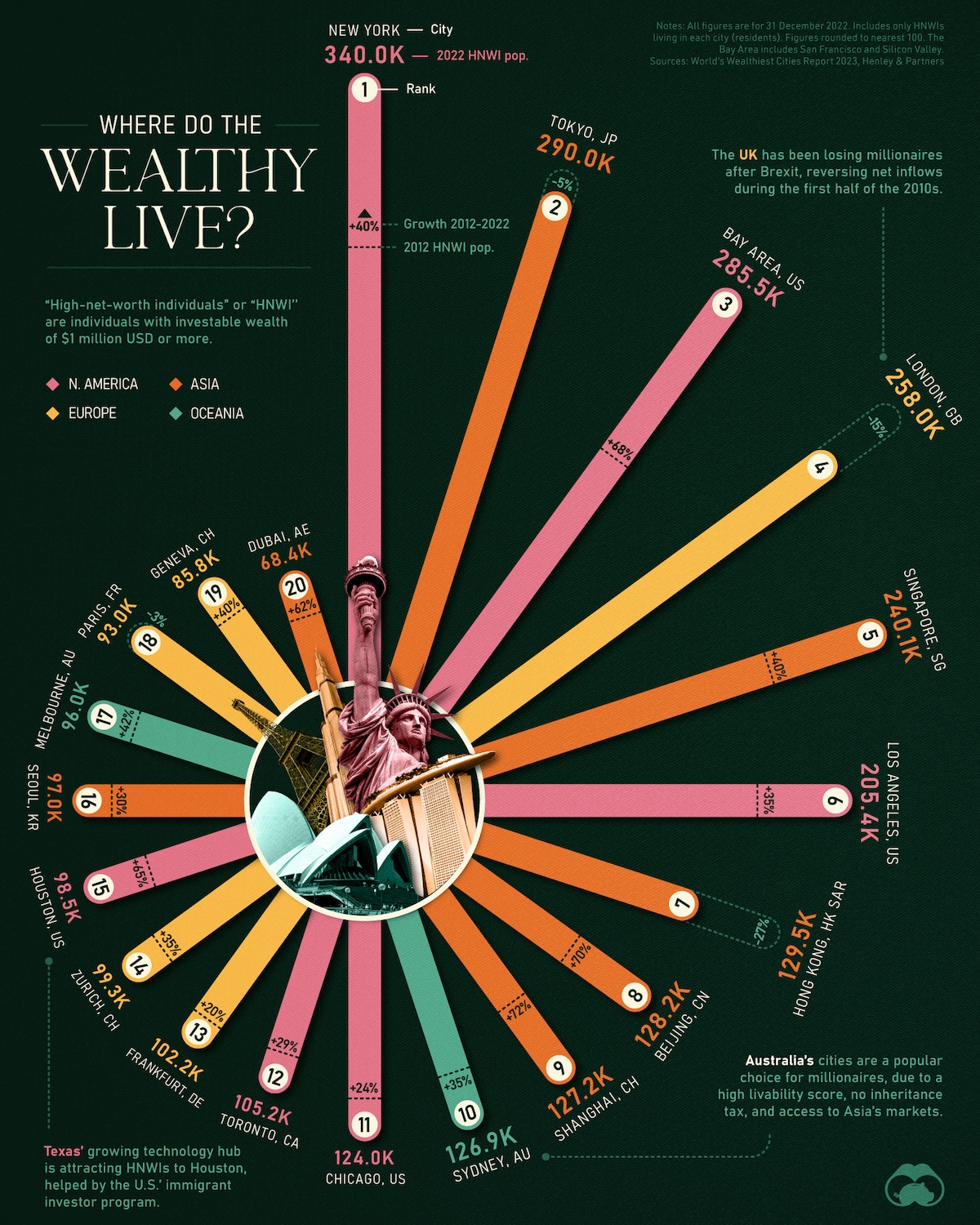
"Techstars isn’t the only entity scaling back in Austin, either. In November, unicorn Cart announced that it was moving its headquarters back to Houston after relocating to Austin in late 2021. The company, which describes itself as an e-commerce-as-a-service business, reached a $1.2 billion valuation in June after raising a $60 million Series C round of funding.
Mitch Goulding, director of communications at Cart, told TechCrunch via email that the company had originally relocated its headquarters to Austin “with the explicit goal of attracting more software talent.” But as the company continues to scale (it claims to have seen its revenue climb by 9x since the end of 2021), it decided it needs to “augment other areas of the company,” including HR, finance, accounting and legal.
“We feel the move to Houston will unlock a deeper talent pool in these areas based on its position as a hub for major business,” Goulding said.
It’s also a matter of cost and convenience.
“Costs in Austin are high relative to Houston’s affordability, [and] Houston is also more accessible,” Goulding said. “It is typically easier and cheaper for employees flying in. It also tends to be easier for employees who drive in from across the state.”
"In Houston, Black-owned businesses have been thriving, with the city now rivaling Atlanta as a destination for Black families and young people.
“Everyone is coming to Houston,” said Victoria Walsh, 30, who moved from New Orleans for a restaurant job in 2018. “There’s a whole lot of jobs, a whole lot of new concepts, a new pop-up each week.”...
The city of Houston has long had thriving Black communities, but in recent years, the new arrivals have driven a kind of renaissance that is fueled, in large part, by who they are: middle-class Black people from other states with good jobs and business ideas. ...
“When you look at other cities, they’re not as diverse as Houston,” he said. “They don’t have as many opportunities.”
"Now, Houston’s transformation to an international hub for a growing number of multinational corporations — backed by one of the nation’s busiest international airports and global shipping ports — has helped propel the city to the top of the second annual FT-Nikkei Investing in America rankings. ...
That reputation has drawn in businesses both big and small. The Houston area is home to 26 Fortune 500 companies, making it the third-ranking metro area in the country. ...
The transition to green energy is helped by the knowhow that made it a centre for oil and gas. Houston boasts unrivalled technical expertise in energy, including manufacturing, engineering, trading markets, and complex industrial project management. It also has a robust energy infrastructure and the nation’s biggest port by tonnage. ...
“Increasingly, people working in the energy transition space are saying, you know, actually where the action is, is here,” says Tudor. “It’s not really San Francisco. It’s not really Boston. It’s Houston, Texas.”
Pros 👍: pleasantly surprised by Houston; plays up affordability, inner loop density, diversity, and the amazing food scene ("strong candidate for best food city in the US")
Cons 👎: bike and anti-car snob, toured Houston on bike in wonderful late October - maybe try coming in August sometime and see how bike-over-A/C'd-car you are then?... 🥵🙄 I've said it before and I'll say it again: Houston was built around the car because it's the only way to bring an air conditioner with you everywhere you go!
"Demographer Wendell Cox’s recent estimates of U.S. housing affordability found unaffordable housing in Dallas, Houston, and other Texas cities that have historically been quite affordable. In a post about housing issues, I noted that Cox’s home price data were based on real estate transactions while the Census Bureau numbers are based on a cross-section of all homes in a region.
Before the pandemic, median real estate transaction prices were only 2 or 3 percent higher than Census Bureau values, indicating that people buying homes represented a good cross-section of America. In 2021, median real estate sale prices were at least 20 percent higher than Census Bureau values. As the recent real estate boom is driven by people who have discovered they can work remotely, which means people of above-average incomes, price-to-income ratios based on real estate transactions overestimate the true value-to-income ratios.
The 2022 data from the Census Bureau confirm this. The data show that the value-to-income ratio was 3.9 for the city of Houston and 3.2 for the Houston urban area. These are a lot lower than the 4.7 in Cox’s paper."
"Houston has the title of second most popular headquarters city for Fortune 500 firms... with 22 of them headquartered in the city...
What makes Texas, or Houston for that matter, so appealing for corporations? Mostly the low cost of living and lack of taxes on businesses. Even Exxon has tightened its belt in the inflationary age, though, shedding its “God Pod” and consolidating its upper management’s formerly exclusive luxury suite into its preexisting Houston campus."
Chronicle: Houston poverty rates the highest among major U.S. metros, new Census data shows. Flip the perspective on this story: So restrict housing -> drive up costs and drive out opportunity-seeking low-income households -> median incomes go up = city wins??? 🤔😠 This is exactly what so many cities do, playing a game of hot potato with low-income households, but not Houston, which should be proud of attracting opportunity seekers rather than embarrassed.
"faster cities are faster because they have more roads and are lower in density (which they describe as have a “larger land area”); and that those roads produce benefits by allowing faster top speeds more than by reducing congestion...The authors conclude that cities that want to increase speeds (and, by stated implication, worker incomes) should build more roads. While it admits that won’t be possible in Bangladesh, it should be possible in most cities and countries. Even if, as the anti-road people argue, building more roads simply leads to more driving, building roads that are faster leads to higher overall speeds which should produce enormous economic benefits."
“Many cities face a difficult choice. If they cut certain services, they could become less attractive and trigger a possible “urban doom loop” that pushes even more people away, hurts revenue, and perpetuates a cycle of decline. If they raise taxes, they could alienate wealthy residents, who are now more mobile than ever. Residents making $200,000 or more contributed 71 percent of New York State’s income taxes in 2019. Losing wealthy residents to low-tax states such as Florida and Texas is already taking a toll on New York and California. The income-tax base of both states has shrunk by tens of billions since the pandemic began.”
…
“As more leases and loans come due, the bulk of the pain is still ahead of us. Over the next two years, many downtowns will find that dozens of buildings are no longer fit for purpose. Municipal services will likely deteriorate, and more people might leave. The worst-case scenario is a return to the 1970s, with bankrupt municipal governments, rising crime, and the flight of (primarily white) upper-middle-class residents. Landlords like to point out that “New York always comes back.” But some cities—like Detroit or Pittsburgh—never recovered from the previous waves of technological change. And even in New York, a comeback may take decades.”
…
“In the ’90s, the internet helped cities come back. As the economy became more dependent on innovation and creativity, many of the largest and densest downtowns boomed. In 2007, the world’s preeminent urban economist, Ed Glaeser, called it a “central paradox of our time” that cities remain “remarkably vital despite ever easier movement of goods and knowledge across space.” Economists have been busy explaining this paradox up until the current crisis. As the theory goes, companies require the rapid exchange of ideas and specialized division of labor that large cities provide. In addition, companies want access to the largest possible talent pool, and top talent likes to live in large cities because of lifestyle considerations.
The consensus among economists was that as technology and media expanded, economic activity would consolidate within a select few superstar cities. But even before COVID, the theory started to crack as some of the top-performing cities saw population decreases, tech giants started distributing their offices across smaller cities, and the office market was propped up by WeWork’s irrational, venture-capital-funded expansion.
The pre-COVID consensus wasn’t wrong, but the leading thinkers did not consider the full implications of their own theories. Once the quality of online collaboration crossed a crucial threshold, the internet itself became the largest talent pool and the premier facilitator of human interaction. And once highly educated individuals could earn a nice living from anywhere, lifestyle preferences became more diverse. This does not mean that superstar cities are doomed, but it does mean that their previously captive audience now has more options.
Cities will have to survive and adapt. In a world of consumer choice, locations must think like consumer products. One way to win is to double down on what only the biggest cities can offer—walkable streets, car-free transportation, and cultural and intellectual diversity. But smaller cities can emphasize shorter commutes, ample parking, proximity to nature, better schools, and lower taxes.”
Honestly, I think that last part is why the suburbs of Houston are booming so much - they get some of the best of both worlds. Fortunately for us, I don't think the City of Houston is quite as dependent on office building property taxes. Our office values weren't as over-inflated either, our return-to-office rates are higher, and we continue to grow quickly (which should fill in some of that office space over time).
The future of remote work and what it means for Houston
This week I want to focus on a single CSM story, because it's the most insightful I've seen on what post-pandemic work might look like: Remote work is here to stay – and it’s changing our lives. There are so many great nuggets, insights, and excerpts in it, which I'll follow with what I think it all means for Houston:
An IBM poll found that 54% wanted to keep working from home post-pandemic, and 75% wanted the option of working from home occasionally.
“What the pandemic made blazingly obvious,” says a Manhattan entertainment lawyer, “is that there is no need for a physical office.” Only a complete lack of imagination, he says, kept the realization from dawning sooner. “Before the pandemic, we wouldn’t have taken the question [of going virtual] seriously. It wouldn’t have seemed possible.” ...
It’s hard to find a management expert who doesn’t judge the work-from-home experiment a resounding – and somewhat unexpected – success. A survey by the recruiting firm Robert Walters found that 77% of professionals believe they’ve been equally or more effective when remote, and that 86% of employers plan to continue remote work “in some form” after the pandemic ends. A January survey by the consulting firm PwC revealed that employer satisfaction had risen even as the year dragged on, with 83% now assessing remote work successful for their company, up from 73% last June.
Wrote one top manager in an email posted by economist Tyler Cowen: “Speaking from personal experience as a white-collar Exec, the productivity gains for our highest value workers has been immense. The typical time-sucks and distractions of in-office work have been eliminated.... Mental focus on productive efforts is near constant. Perhaps most importantly, work travel is not happening.” ...
Among venture capitalists and venture-backed entrepreneurs, 74% now expect their companies to be majority or fully remote. ...
“Even before the pandemic,” he says, “big cities like New York, Los Angeles, and Chicago were losing population to suburbs, lower-cost metro areas, and less expensive states in what Zillow called ‘a great reshuffling.’”
The trend has accelerated, Mr. Kotkin says. “In just the past six months, New York City lost almost as many residents as it gained since 1950.” He notes that a recent report by Upwork, a freelancing platform, suggests that 14 million to 23 million Americans are seeking to move to a less expensive and less crowded place. Welcome to the “Zoom towns.” ...
The market research firm Forrester predicts a 60-30-10 split among organizations: post-pandemic, 60% will be hybrid, 30% will be all-in-the-office, and 10% will be all-remote. ...
Experts can point to only one other work style “experiment” like the one caused by COVID-19, though its sample size in comparison was minuscule. When a 2011 earthquake demolished Christchurch, New Zealand, the entire community turned immediately to telework. Then the city rebuilt, renewing its stock of office space. Yet years later a study revealed that Christchurch’s workers continued to operate remotely, away from their freshly available workplaces. “When [the crisis] was over,” said a researcher, “they didn’t go back.”
If the expert consensus proves right, Americans won’t go back, either.
“As remote working has boomed during COVID-19,” summarizes a study by the University of Utah, “the rise in the number of people working from home has prompted many to reconsider where they wish to live.” Which means, as the survey data already indicate, that as many as 40% of office workers could scatter outward from the name-brand cities to places more spacious and affordable. ...
“As life at work [when remote] will be less social, people will have to get more of their socializing from elsewhere. So people will choose where they live more based on family, friends, leisure activities, and non-work social connections. Churches, clubs, and shared interest socializing will increase in importance. People will also pick where to live more based on climate, price, and views. Beach towns will boom, and the largest cities will lose.”
So workers will be more dispersed, and more of their working hours will be spent where they live instead of elsewhere in an office. The question is: Could all this lead to a “reset” of the locus of community in America?
Might the center of gravity shift at least somewhat from the office to the neighborhood – back, in a sense, to something closer to a pre-industrial model? What might it mean for our culture if the human contact that offices used to provide is replaced by closer-to-home human connections? And how might that affect the health of local communities and even levels of societal trust? ...
Here Mr. Kotkin quotes Lenin: “There are decades when nothing happens; and there are weeks when decades happen.”
So what does it mean for Houston?...
Working against us:
Not a classic lifestyle-destination city (think Austin, Denver, Miami) - no mountains or beaches
Big city problems, including traffic and crime
Climate: flooding, hurricanes, heat and humidity
Working in our favor:
Lots of Houston ex-pats that can come home to be closer to friends and family
Industries that are less amenable to remote work: manufacturing, refineries, port, health care, NASA, even energy to a significant extent
The most affordable global city in America - big-city amenities at an affordable price
Strong community culture for such a large, diverse city
High pull among immigrant networks
Overall I'd say we're likely to come out fairly well - not as good as the popular lifestyle cities, but much better than the unaffordable superstar cities like SF and NYC. Would love to hear your own thoughts in the comments...
The future of superstar cities and Houston, CA's problems, warehouse glut, why tech in HTX?
Hope everyone's staying safe and warm during this way-way-way-too-cold Valentines+Presidents Day winter storm. The lead item this week is a really interesting piece my friend George sent me on the future of superstar cities by Matthew Yglesias. I think his observations are directionally correct, but he’s missing some pretty important nuances.
First, he’s completely ignoring extended family pulls that bring people back to regions.
Second, he’s seeing everything thru the lens of the footloose and fancy-free celebrity rich (the Matt Damon and NBA references), and that is an incredibly tiny part of the population. His alternate lens is 20-something tech startups – also a pretty narrow niche. Normal people have family ties and different reasons for picking places. A lot of the NYC/LA amenities he thinks are so key aren’t that valuable to families, and they’re the ones most likely to leave.
Third, he’s ignoring the *relative* impact of remote work. NYC and LA have a mix of people who want to be there for lifestyle and have to be there for work. Once the work reason is gone, a lot of them have left and will continue to leave (look at the Wall Street types moving to Miami). The lifestyle people may stay, but those cities are still declining relative to what they were when they could hold onto both groups. They will face massive budget deficits which will push them to raise taxes which will push even more people to leave.
As far as Houston, we’re not on the national media radar, but I have personally seen a *ton* of out-of-state plates around recently. The media forgets that they don’t drive most people’s location decisions – it’s what they hear from friends and family, and most Houstonians like it here and plug it to their extended friend/family networks (including talking about the kind of home they can afford), and those friends/family decide to move here based on that recommendation. But obviously the weak oil industry is not helping, and the GHP is absolutely right we need to diversify our economy and build our innovation economy (my latest idea for that). But our core engine is a good sustainable one – not oil, but having a great lifestyle (esp restaurants) at an affordable price (from lack of zoning) that people tell their networks about. As long as we sustain and keep improving that, we will keep growing, even as ‘hotter’ cities like Austin and Miami become ever more crowded and unaffordable. As long as articles like this are being written about us, we’ll do just fine:
Moving on to this week's items:
NYT: The Californians Are Coming. So Is Their Housing Crisis. 'Is it possible to import growth without also importing housing problems? “I can’t point to a city that has done it right,” said Lauren McLean, Boise’s Democratic mayor.'
Houston. Houston has done it right. (one of my more popular tweets) More of these cities should look to our model for handing rapid growth without unaffordable housing.
Ezra Klein in NYT: California Is Making Liberals Squirm. If progressivism can’t work there, why should the country believe it can work anywhere else?
"Conservatives do not resist many regulations of the sort seen in California because we want cities to be horrible or because we secretly are in the pockets of developers who for some reason want their cities to be horrible; rather, we are skeptical of such schemes because they tend to create artificial shortages, distort markets and investment decisions, and prevent solutions from emerging organically. “Markets work!” is cartoon libertarianism, but you know what? Markets work. And if you don’t let them work, you end up with artificial scarcity, high prices, and rationing."
"In some ways, Houston is anomalous. Its business-friendly regulation puts very few restrictions on building. “There’s no zoning,” said Ryan Byrd, a principal of Colliers International Houston. “If there’s land that doesn’t have a pipeline, wetlands or is in a flood plain, you can build a building in less than one year.”
Honestly, I think the second one is the more realistic option right now, and could be very popular. The simple pitch for the second one is the world’s largest climate-controlled park. People love going to parks, but not during Houston’s extreme weather, especially summers and thunderstorms. Having an activated park full of activities and festivals on weekends that is always protected from heat and rain would be a very popular spot for Houstonians, especially families desperate to find affordable activities every weekend. And it could easily start very modestly and then expand over time with philanthropy (like has been happening with the zoo, MFAH, and HMNS) as well as parking charges to cover operations.
Live and Lets Fly blog on 7 must-try restaurants in Houston. As a local, I’ll say this list is pretty solid, but really barely scratches the surface of the incredible depth of Houston's restaurant scene, honed from being where cultures mix – originally South + West + Mexico, but later from everywhere including Asian – plus the lack of zoning allowing absolute hypercompetition: good won’t cut it here, a restaurant better be great if it wants to survive. That Darwinian evolution has honed the scene over decades to where it’s finally getting the acknowledgment it deserves, like from GQ.
"But there’s another factor I hadn’t considered, one that so far appears to be the single largest driver of pandemic-era migration: family."
Bloomberg: Silicon Valley Won't Last Forever, and Texas Knows It - The birthplace of Dell and TI has been quietly building its tech industry since the 1930s. Now it has the chance to move into the spotlight (hat tip to George for archive link). Includes a nice excerpt on my alma mater:
"Part of the reason for this trajectory had to do with another institution that continues to play a key role in driving technological innovation in the state: Houston’s Rice University, which played a role comparable to Stanford's vis-à-vis Silicon Valley. In fact, many of the early players in Silicon Valley actually moved to California after graduating from Rice, constituting what is sometimes called the “Rice Mafia.”
How appropriate, then, that Rice would play a key role in the next step in the rise of Texas. In 1961, the university donated more than a thousand acres of land for the construction of what became known as the Johnson Space Center, flooding a once-provincial city with literal rocket scientists. Like Silicon Valley, where government contracts and connections proved essential in getting the region off the ground, Houston’s leadership in the space race kick-started a host of related industries."
"If California is a vision of the sort of future the Biden administration wants for Americans, expect Americans to demur."
The Atlantic: Superstar Cities Are in Trouble - The past year has offered a glimpse of the nowhere-everywhere future of work, and it isn’t optimistic for big cities. It includes four predictions and a conclusion I would never have expected to see in a magazine like The Atlantic!
The rise of the supercommuter
The decline of the coastal superstar cities
The rise of the rest
The next Silicon Valley is nowhere
"As an urban resident of Washington, D.C., writing from my dining-room table, my claim is not that I believe the internet could or should replace the riotous physical-world collision of urban work, culture, art, and life. My humbler assertion is that 2020 has punctured my confidence that the internet cannot encroach on the benefits of urban density and proximity. Going forward, many fledgling companies may agree, as they find that the city in the cloud essentially acts as a more accessible version of the city on the Earth, eerily reproducing its forces of agglomeration, specialization, and convenience. The past 12 months have offered a glimpse of the nowhere-everywhere future of work."
A new strategy for securing Houston's economic future
Talk has been growing in recent years about Houston's future in a less carbon-intensive energy world. Will we still be the world's energy capital in the coming decades, and what does that mean? The Greater Houston Partnership and Center for Houston's Future have taken the lead on this challenge with their Energy 2.0 and energy transition work, and I hope they're getting traction with it (despite pandemic distractions). We certainly have a lot of expertise here that can work on big problems like carbon capture with the right economic incentives.
Another strategy is growing our innovation and startup ecosystem to build the companies of tomorrow - especially in energy, space, and biotech - and I think there has been great progress made in recent years, including Rice's building of the Ion in Midtown. One area that has not been as successful is trying to attract tech companies building new offices. To be brutally honest, we can't out-Austin Austin.
The energy transition and innovation ecosystem are both great initiatives to help secure Houston's economic future, but I think there's a third opportunity we're overlooking. It plays perfectly to our strengths:
America's most affordable global city (vs. NYC, LA, Chicago, SF, Miami)
Being more attractive to global migrants than domestic ones (which seem to be more interested in places like Austin, Denver, and Nashville)
Large expat communities from countries all over the world
92 foreign consular offices, the third-largest set in the US after NYC and LA
One of the largest ports and industrial bases in the country
A huge United hub at IAH with nonstops covering all of the Americas in addition to European, Asian, Middle Eastern, and ANZ connections.
Put all those strengths together and what's the opportunity? To be the location of choice for foreign companies establishing their branch office for the Americas, especially industrial ones. There are thousands of fast-growing companies around the world that will need to establish a presence in the Americas at some point, and Houston is really the ideal place for them to put it for all the reasons listed above.
I think we already compete for these to some extent, but there's an opportunity to do it much more aggressively with a formal, well-funded program that cooperates closely with all our foreign consulates to identify their up-and-coming companies and start wooing them as early as possible. Without outside influence, they probably tend to end up in the cities that are more obvious and well-known to them like NYC, LA, and Miami. But if we intervene early and show them how much better Houston will ultimately be for both their business and their employees, I think we can win over a substantial number of them. Their expat employees used to small flats and public transport in crowded cities will be blown away by the equivalent home and car they can buy in Houston, Sugar Land, or The Woodlands!
These foreign branch offices aren't as sexy as green energy, tech, or entrepreneurial startups, but over time they could provide a very strong foundational component to Houston's economy with a whole lot less uncertainty and volatility. Even better, we won't have that much competition - it's an opportunity ignored by most cities as they chase the hot tech companies and try to cultivate their own startup scenes. Foreign corporate offices should definitely be the third strategy to secure Houston's economic future in a world increasingly hostile to oil and gas.
Would love to hear additional thoughts and feedback in the comments...
Reasonably fair assessment putting Houston and Miami in the next two slots of America's global cities behind NYC, LA, and SF (but why is energy independence bad for us? It's great!). We're still the most affordable global city in America. Dallas not even mentioned... ;-)
Cities Investing the Most in New Housing: Texas Triangle dominates. Houston #5 on a relative-to-population basis (Austin #1), but #1 in total volume, #2 in total value (behind DFW), and #2 most affordable housing (behind San Antonio).
Any state high in migrants is also going to have a higher renter percentage
A fixed $800 rent price point will naturally have units decline under it over time just due to natural inflation
Our cost ratios are just matching the US as a whole
But mainly I expect everything to (eventually) get more affordable under covid (see previous item). It will certainly free up a lot of workers from service industries for construction, which has been a major issue for builders. And people being free from commutes reduces price premium of close-in properties and opens up exurban ones.
McKinsey: Restoring public transit amid COVID-19: What European cities can learn from one another. I think the biggest impact locally will be the park-and-ride service, but Metro should be able to manage overall. But I truly don't see how NYC will be able to operate anywhere close to normal. DC, Chicago, Boston, Philly, SF, and others will also be significantly affected.
"Physical distancing will cut transit capacity to 15-25% of normal, but use of PPE could increase capacity to 40%."
NYT: The Agonizing Question: Is New York City Worth It Anymore?For many, the call of an easier, safer and more affordable life beckons. But die-hard New Yorkers find the city more appealing than ever. The new Escape from New York... 420,000 already gone in three months is a staggering number! Obviously many are temporary. But there are also probably tons of people still there that have decided to leave but are waiting out their leases.
“New Yorkers have been fleeing for months. But the fear some residents have of the violent reactions to the protests here is adding a new challenge to those asking themselves whether they can hack the city. Many are deciding not to return.
It’s a decision that must be made individually and privately, one that some 420,000 New Yorkers with the resources to do so had already made between March and May in reaction to the pandemic, according to cellphone data analyzed by the Times.”
"For some, it’s a chance to be closer to family, which feels more urgent in the midst of a global health scare. For a large swath of people in the country’s most expensive cities, it’s a way to get more living space and be closer to nature, something increasingly made possible by the growing trend of remote work. And for many others it’s not really a decision at all, but a necessity in the face of growing job losses and still sky-high rents.
… And people in cities hit hard by the pandemic — New York, San Francisco and Seattle — are searching for remote work opportunities significantly more than the rest of the country, LinkedIn data shows. Some real estate data suggests many are already considering or making a move to a smaller town or suburb. Real estate company Redfin said page views of homes in small towns more than doubled during the last week of April compared with last year.
... She said she’s hearing from mostly young families — professionals with small children — who want to trade the confines of a locked down New York City for houses with home offices and yards.
“It’s no longer temporary. People are saying, ‘I’m not going back. This could happen again and we don’t know when it’s going to end,’” said Bernstein.
“New York doesn’t feel worth it anymore,” he said."
The convention business is cratering, and cities are getting stuck with the bill. I'm not sure how our bonds are structured, but I'm guessing Houston and Harris County will be hit pretty hard by this. We've used hotel taxes to subsidize GRB, NRG, and stadium expansions, and now those hotels are bringing in very little revenue. I'm assuming taxpayers are on the hook to make the payments...
"Houston and NYC both issued around 61k permits in 2019. But metro New York City is nearly 3 times bigger than metro Houston, meaning its construction activity in 2019 (30.4 permits per 10k residents) was much less than Houston’s (88.3 permits per 10k)."
Click to enlarge
Cities With the Most Self-Employed Workers. Houston is #15 by percentage, but #3 by total numbers with 330,415, behind NYC and LA. Miami is #1, I assume because drug smugglers are considered "self-employed" (just kidding! watched too much Miami Vice as a kid, lol ;-)
City Combined Taxpayer Burden Report 2020. Houston has a combined local government debt burden of $25,800 per taxpayer, which is the 4th lowest of the top ten cities, and far better than NYC at $83,600 and Chicago at a whopping $122,100! Looking at their math, they have ~681k taxpayer households for Houston, which sounds about right for a city of 2.3m. Hat tip to Charles.
Finally, I wanted to end with a short video from the KAS Strong Cities 2030 project that I've been involved with the last couple of years. They put together clips of how different cities are dealing with the Covid-19 crisis, including yours truly at the 1:49 point (albeit recorded a couple of months ago and a bit dated at this point).
Hobby rail critique, livable city ranking flaws, Houston tops Dallas for homeless reduction, and more
This week's items:
I've come around to accepting light rail to Hobby in the MetroNext plan as a less-than-optimal compromise among many different constituencies, but this Urban Reform blog post by Connor Harris of the Manhattan Institute makes a pretty strong case about the cost-inefficiency of such a line at $167,000 per new daily rider. His alternative:
"For improving service to Hobby Airport, Houston Metro has a much faster and cheaper option: express buses.
Currently, bus route 40, the only direct bus line from the airport to downtown, takes a scheduled 55 minutes to cover a distance that is less than 9 miles as the crow flies. An express bus alongside Interstate 45, however, could easily make the trip in 20 to 30 minutes—substantially faster than light rail, which currently averages only about 15 miles per hour. Buses could make the trip this fast even during rush hour: Interstate 45 has a separate HOV lane all the way from the airport to downtown, and adding an entrance at Airport Boulevard for express airport buses would just require repainting a few lane markings. Special-purpose express buses could also be fitted with luggage racks, which would compete with rush-hour commuters for space on light rail trains."
"Issues such as housing affordability are taken into account, for example, but have to balance against more rarified qualities such as access to opera, high-end restaurants, and other amenities. This isn’t all bad—for those who can afford them, opera and restaurants are wonderful things. The result is still that rankings often end up assessing cities in terms of a small band of citizens for whom almost all of such metrics are relevant. They assess, broadly, how much potential a city possesses when seen from a privileged point of view: that of a straight, affluent, mobile, and probably white couple who works in something akin to upper management and has children. Remove even one of those characteristics from the equation and the results often seem way off the mark. City rankings are thus a window onto the projected tastes of a highly specific elite."
This month’s edition of the Greater Houston Partnership's Houston: The Economy at a Glance analyzes recent population estimates and discusses how the region's population has grown since '10, provides an employment update, and summarizes the Partnership's recent publication, Global Houston.
HTX tops for millennials, startups, and middle-class home affordability; Houspitality support, highway vs. rail cost-benefit
So a sad week here at Houston Strategies: I have a draft post where I keep ideas for future posts. It had gotten quite long over the last 14 years, with tons of good thoughts and links whenever I had time to get to them. Well, that all came to a crashing end last week when I discovered a Blogger quirk: if you open a post, paste in some content, realize it's not formatted right and accidentally hit Undo twice, it *wipes out the entire post* then auto-saves the blank version (and unlike Google Docs, Blogger does not keep a version history of posts). Then I unwisely compounded the error trying to close the browser tab before the auto-save instead of just hitting the redo button. Regardless, it's all gone now - 14 years of potential post ideas... 😳😢
Moving on to this week's items... lots of kudos for Houston this week!
"The region also has a reputation for welcoming newcomers, whether they’re from New York or New Zealand...a global city, with 90 consulates, two international airports, the second busiest seaport in the nation, and nearly 1,000 foreign-owned companies with HTX ops"
"Houston ranked among the top three cities in several specific areas, including diversity, ease of meeting new people, fair income taxes, everyday expenses, salary potential and amenities for children."
More details here, including some cool comparative graphs (hat tip to George). Houston is a pretty dominant #1, notably ahead of #2 Atlanta and #3 Dallas in the overall value graph (also notably ahead of #5 Austin!).
"In 2004, Denver-area voters approved a sale tax increase to pay for “FasTracks,” a plan to build 119 miles of rail transit lines in the metropolitan area. In 2008, California voters approved the sale of bonds to pay for the construction of a 520-mile high-speed rail line between Los Angeles/Anaheim and San Francisco/San Jose. FasTracks is within a metropolitan area and high-speed rail is supposed to connect several metropolitan areas, yet there are a lot of similarities between these two projects.
Both rely on technologies that were rendered obsolete years before they received voter approval. The agencies sponsoring both projects ignored early warning signals that the projects were not cost effective. Both had large cost overruns. Advocates of both lied to voters about the benefits and costs of the projects. Due to poor planning, both projects remain incomplete. Despite the failure of the projects to date, both have adherents who hope to complete them."
"Between 1980 and 2016, L.A. passed three major transit sales tax measures and built 110 miles of rail. Yet ridership on L.A.’s transit system has been slipping for years, while the number of miles traveled in private cars is rising. Other American cities that have passed major transit measures are facing the same conundrum.
...
Thus, few Angelenos viewed transit as an amenity that directly benefited them. People voted for Measure M as an expression of their political beliefs, and in support of a broader social good—someone else will use this public service and improve congestion, just not me."
Houston moves up to "Alpha -" in the new Global City rankings. We were Beta previously. Our US peers are SF and DC, while we're behind NYC, LA, Chicago, and Miami. We're just ahead of Dallas, Boston, and Atlanta stuck in Beta +, while Austin is all the way down in Gamma.
"There’s an abundance of pride here in the state’s brief history as a nation, its superior way of life and, yes, its gas stations."
McKinsey on Reimagining Mobility. Cool scrolling infographic instead of a normally written report. They're predicting 80% of vehicle miles will be fully autonomous by 2030.
"Nearly three decades later, Houston is not just the hottest food city in Texas — it owns a growing brand as one of America’s great culinary capitals. The city’s nebulous image as a sprawling energy boomtown and space nexus has crystallized into something far more tangible and inviting.
...
....chef David Chang, who has pronounced Houston “the most exciting food city in America.”
“There’s great produce, the abundance of the Gulf of Mexico, a confluence of ethnic groups, and really lax governance,” he said. “You have Texas barbecue and Tex-Mex culture, you have Vietnamese and Indian. You have all that there and you have space — you have so much land.”
“People say Austin is weird, but I think Houston is way weirder than Austin,” Chang said. “Nothing makes sense. And that’s amazing.”
Congestion improvements, global superstar city, biggest homes in America, up vs out debate, Vision Zero flaws, CA vs. TX, and more
Ok, first an apology for such a *long* gap between posts. I have been nearly continuously traveling since early Sept (multiple trips mixing work and fun), including presenting MaX Lanes at the Strong Cities 2030 sustainable mobility symposium in Essen, Germany and debating up vs. out urban development policies at the Breakthrough Institute Ecomodernism 2018 conference in DC. Both events went really well and I got very positive feedback. As you might expect with such a long gap, a lot of smaller items have gotten backlogged:
"The other point that leaps out of the table is the change in rank of Dallas and Houston, both of which moved significantly lower in the league table of most-congested metro areas. Both have a growing fraction of their expressways that are tollways, and both have expanding networks of variably priced managed lanes. Also striking is that Portland, with just one-third the population of Dallas, has nearly the same average congested hours per commuter and has nearly double the percentage of peak period hours that are congested."
"Vision Zero is a failed policy from a paternalistic government that takes millions of dollars to implement and never reaches its goal of zero deaths, in part because its goal is completely unrealistic. But Vision Zero does make life harder for commuters and those delivering freight. Yet this is the policy that many U.S. cities want to implement."
Joel Kotkin in City Journal on "One Nation, Two Economies - More than gender, race, or other hot-button media issues, a deep socioeconomic divide will shape the midterm elections."
"The 50 cities account for 8 percent of global population, 21 percent of world GDP, 37 percent of urban high-income households, and 45 percent of headquarters of firms with more than $1 billion in annual revenue. The average GDP per capita in these cities is 45 percent higher than that of peers in the same region and income group, and the gap has grown over the past decade."
Should Houston promote an annual TAMU-LSU football game? Houston's #1 Winner-Take-All-City Quotient, #2 std of living, innovation corridor, and more
Before getting to this week's items, an idea for Houston as we wrap up the college football regular season: just as UT and OU play each other every year at their midpoint in Dallas with the Texas State Fair all around them (quite the tourism boost for Dallas) - and now that TAMU is in the SEC with a new coach - has anyone considered trying to promote an annual TAMU-LSU game in Houston at NRG Stadium? I think it would have a lot of potential given the numbers of alums of both schools here - high profile for the schools and a good tourism boost for the city. And I could see a whole weekend of festivities around the event centered on downtown and midtown (like a mini Super Bowl). Would love to hear thoughts in the comments... or if you know someone with the GHCVB please pass it along!
"For each global city, and for the various categories of global cities, we calculate a “Winner-Take-All Quotient” (or WQ). This is a simple “over-representation ratio” that compares the share of the total amount of economic output, venture capital investment and/or, billionaires in a global city divided by its share of the world’s population. ... Indeed, the 20 largest global metros (by economic output) account for a considerably larger share of the global economic output than they do of global population (see Table 2). The WQ for these cities range from lows of 1.2 and 1.3 in Mexico City and Sao Paulo to highs of 4.5, 4.7, and 4.8 in New York, Washington, D.C., and Houston."
Houston is still #2 behind San Jose in our second year of doing the COU Standard of Living rankings, with a cost-of-living adjusted real pay of $58,401 per job.
NYT expose on how incredibly dysfunctional their transit agency is. I know there are mixed feelings on METRO here. I've certainly seen a mix of good (original red line, bus routes reimagining) and bad (new rail lines) decisions. This is why I think the right long-term answer to low-income mobility will be subsidies to private transportation-as-a-service providers as autonomous taxis and shuttles become incredibly cheap, just like we do now with food and housing vouchers.
"...compel employers who provide free parking to offer transit benefits (like a pre-tax bus pass) or a cash payment to workers who find another way to the office. The goal here isn’t to stamp out cars, but to let the non-drivers “cash out” the value of "free" parking. Research suggests this sort of “parking cash-out” works. A series of LA-based case studies by UCLA urban planner Donald Shoup found these programs can decrease the number of drivers who motor alone to work by 17 percent, and increase rates of carpooling, transit riding, biking, and walking."
WSJ: Where High-End Renovations Cost $704,000: "Rising home prices fuel high-end renovations in Houston; homeowners are confident they’ll recoup costs when they sell." Key excerpts:
"Everything’s big in Texas—including home renovations. Houston homeowners, with a median budget of $704,000, outspent remodelers in 74 other U.S. metro markets, according to an analysis of building permits for high-end projects. ... “People are feeling really good about the city, and the amount of money they can put into their houses,” said Stephen McNiel of Creative Property Restoration, a builder in Houston."
Definitely a sign of the high standard of living here (average salaries adjusted for the cost of living) that people can afford to spend so much on home renovations.
"With full recognition that our credibility is suspect, I nonetheless come today to proclaim Houston one of the great eating capitals of America. I mean (and here I mount the mechanical bull) far better than anywhere else in Texas, better than anywhere else in the Southwest, better for that matter than in my current place of residence, Washington, D.C. That the nation’s fourth-largest city is no longer one gigantic steak platter for oil barons should not constitute breaking news. One can go on about the city’s indigenous assets, such as its array of Gulf Coast ingredients and its surprising multiculturalism.
But the main reason for Houston’s culinary ascent is economic. This became clear to me one afternoon last fall while eating at Étoile, a vibrant French restaurant that opened in 2012 near the city’s famed Galleria mall, and whose chef and owner, Philippe Verpiand, hails from Provence. After running a restaurant in San Diego with his wife, Monica, for seven years, Mr. Verpiand decided in 2011 to check out Houston. What he discovered, he told me, was that the Bayou City “is very affordable and full of people who like to go out at night and spend money.” It costs probably one-third less to build and design a restaurant here than in California, he said, adding, “I can afford to pay sous-chefs full time and be able to spend the weekends fishing and duck hunting with my boys.”
Such cost savings are passed on to Houston’s consumers, who can enjoy a first-rate meal here for maybe two-thirds of what such a dinner would come to in New York or San Francisco."
Finally, continuing our series of COU videos on Texas cities, this week's focus city is San Antonio, a city I visited last weekend and really enjoyed despite the 100+ degree heat. The Pearl District is the most impressive industrial re-adaption I've ever seen - Houston needs something similar!
"For about a decade, there’s been a growing bipartisan consensus that America’s cities need liberalization. This consensus formed because of the problems our cities now face thanks to government control. Urban housing supply has been artificially limited by regulations, causing price inflation; publicly-run transportation systems create gridlock and delay; and other services are riddled with patronage."
"No city in America runs on anything resembling a free-market model. But Texas' major cities are probably the closest thing, with vast improvements to their economies and living standards to show for it. Their looser land-use laws mean that housing supply grows quickly, stabilizing prices. Their lighter tax and regulatory structure helps businesses locate there and grow. And—shenanigans from the governor's office notwithstanding—their openness to immigrants means they have cheap and robust labor forces.
...
Another thing Texas' toll roads have accomplished is greater mobility. The Dallas and Houston metros, in particular, have been the nation’s two fastest-growing metros by net population since 2010. But their congestion levels are not as bad as similar-size metros, according to traffic studies by Inrix and TomTom. This is because they've expanded highway capacity to accommodate population growth, acknowledging that the laws of supply and demand apply to roads like with anything else. Perhaps more crucially, though, they’ve priced the use of these roads, to avoid a tragedy of the commons. And it has worked at creating many excellent, self-funded roads: as I can attest from having lived last summer in Houston, Dallas and Austin, toll roads proliferate throughout each metro, are free-flowing, and charge users electronically, so that they're not having to stop and pay at booths."
While I find this piece from Richard Florida insightful (arguing that land-use restrictions and high housing prices on the coasts helped keep some talent and jobs in the rust belt cities that otherwise would have left), I don't buy the high-speed rail argument for increasing the labor pool that can access a metro area. Given the pricing of HSR tickets, it's highly unlikely to me that very many people are going to be willing to spend $100+/day commuting to work!
"In many ways, Houston’s Super Bowl was a tremendous success. On the field, it was perhaps the most exciting game in the 51-year history of the event. The weather was perfect, the mild Texas winter providing a comfortable respite for visiting fans and media. For locals and visitors alike, the events at Discovery Green and throughout the Super Bowl Live experience offered engagement with the event regardless of whether they could afford a (minimum) four-figure ticket to the game itself. Taylor Swift had a good time! So did Sting, The Goo Goo Dolls, Travi$ $cott, and the other entertainers who visited and performed for the crowds.
...
Still, even with the fuzzy math of an economic impact report, the Houston Super Bowl was a success.
...
The impact of Super Bowl 51 on Houston also highlights the significance of events like the Houston Livestock Show and Rodeo, or SXSW and the Austin City Limits Festival in Austin... Cities around the country compete, year after year, with aggressive bids for the chance to host Super Bowls. The Rodeo happens every year and brings in more money, while SXSW annually serves as a recurring pitch to the 85,000 or so people who come to town that Austin is a cool place to live, work, run a business, and spend money. No matter the exact numbers, the Super Bowl seems to have worked out for Houston—but the most impactful events seem to be the ones that are annually in our backyard."
DART eviscerated, tolls vs sprawl, transit apocalypse, build the Ike Dike, top rankings, and more
After my last post which included problems with DART, a reader sent me this Dallas Observer story that's even more damning of the utter failure of DARTs commuter light rail strategy while subtly endorsing Houston METRO's approach:
"Since the founding of DART in 1983, the city has been shackled to the suburbs in the creation of what has become the nation’s dumbest mass-transit system.
Instead of investing money where it could actually make a difference — in the dense, urban core where people might be talked out of their cars — DART has spent billions of tax dollars building a kind of amusement park ride. DART has squandered our resources and our time building a slow-poke, light rail, surface-running system that screws up traffic, takes forever, attracts miserably few riders and, as a result, operates at an ungodly subsidy. Its real purpose has been to serve as an amenity and sales-pitch bauble for suburban apartment developers. ...
DART, as presently constituted and designed, is a massive failure that sucks up scarce resources we need to spend on smarter things. If DART were a horse, we'd shoot it."
In other news, I find it amusing that anti-toll forces have joined with anti-sprawl forces to oppose new suburban toll roads, like the extension of 249 past Tomball. In theory, anti-sprawl forces should vigorously support toll roads because they better price somebody's decision to live far out and commute in. The problem with the anti-sprawlers is that they realize even fully priced with toll roads, people prefer affordable suburban living and will still live out there, so they prefer to kill the roads by any means necessary, even if that means aligning with the anti-toll people, who want the road, they just want it to be free (the opposite of what the anti-sprawlers want!). The unfortunate bottom line is that the anti-toll crowd has gotten politically powerful enough the politicians have to go with it, but TXDoT and rational officials realize it's not toll vs. no-toll, it's toll vs. no-road, so they're going to keep building them because they keep filling up with demand as fast as they're built!
"Isn't the more likely explanation that people who spend a lot on housing don't have much money leftover for transportation? And those who do have affordable suburban houses have plenty to spend on high-end vehicles? Is it really fair to say a suburban house has a "high cost of transportation" because people are buying high-end trucks, SUVs, mini-vans, and luxury cars, when they just as easily could buy a cheap used Honda Civic or Toyota Prius if they were really concerned with keeping their transportation costs low?"
Moving on to make a dent in the huge backlog of smaller items to share...
"Boasting affordable living costs and a large number of incubators, Houston takes the title as the number one best city for minority entrepreneurs. The city has one of the most diverse populations and its bustling startup scene is full of minority-owned business ventures. It also comes in fourth place for the most economic opportunities for minorities."
Houston, Texas Texas' most underrated big city does almost everything right. City population: 2,167,988 Cost of living index: 90 (10% lower than US average) If you lament your city's poor planning, crumbling infrastructure, and careless corporate community, look to America's fourth-largest city for examples of how all that should be done. Not gonna lie: The traffic can be a drag, and the swampy summers are a slog. But overall Houston has its shit together better than any city its size.
Even though the oil industry isn't the king it once was, health care, construction, education, and tourism are bringing people to Houston by the tens of thousands. With them have come new sports stadiums, new neighborhoods like the artsy EaDo or the hipster-historic Montrose, and a worldly food scene that extends waaaay beyond the usual barbecue and Tex-Mex (though, obviously, both of those are great too). Through public-private partnerships, Houston has developed America's premier museum district, plus stunning urban green spaces like the 160-acre Buffalo Bayou Park, and it's only adding each year. In terms of perceived "coolness," H-Town is still in Austin's overinflated shadow, but in a state this hot, the shade is a pretty good place to be. Improving quality of life while still rapidly growing? Take notes, Austin. -- M.M.
An open dialogue on serious strategies for making Houston a better city, as well as a coalition-builder to make them happen. All comments, email, and support welcome.